
The Hive Within
"I've gotta be me."

This post is the third in a short series on what holds us together, concluding Sunday. Last Monday’s post asked what kind of country memory is meant to make. Wednesday’s followed with the second half of the question: what kind of faith can make that memory endure? Today’s post turns to belonging together without losing ourselves. Sunday’s will turn to excellence: how to honor distinction without slighting equality.
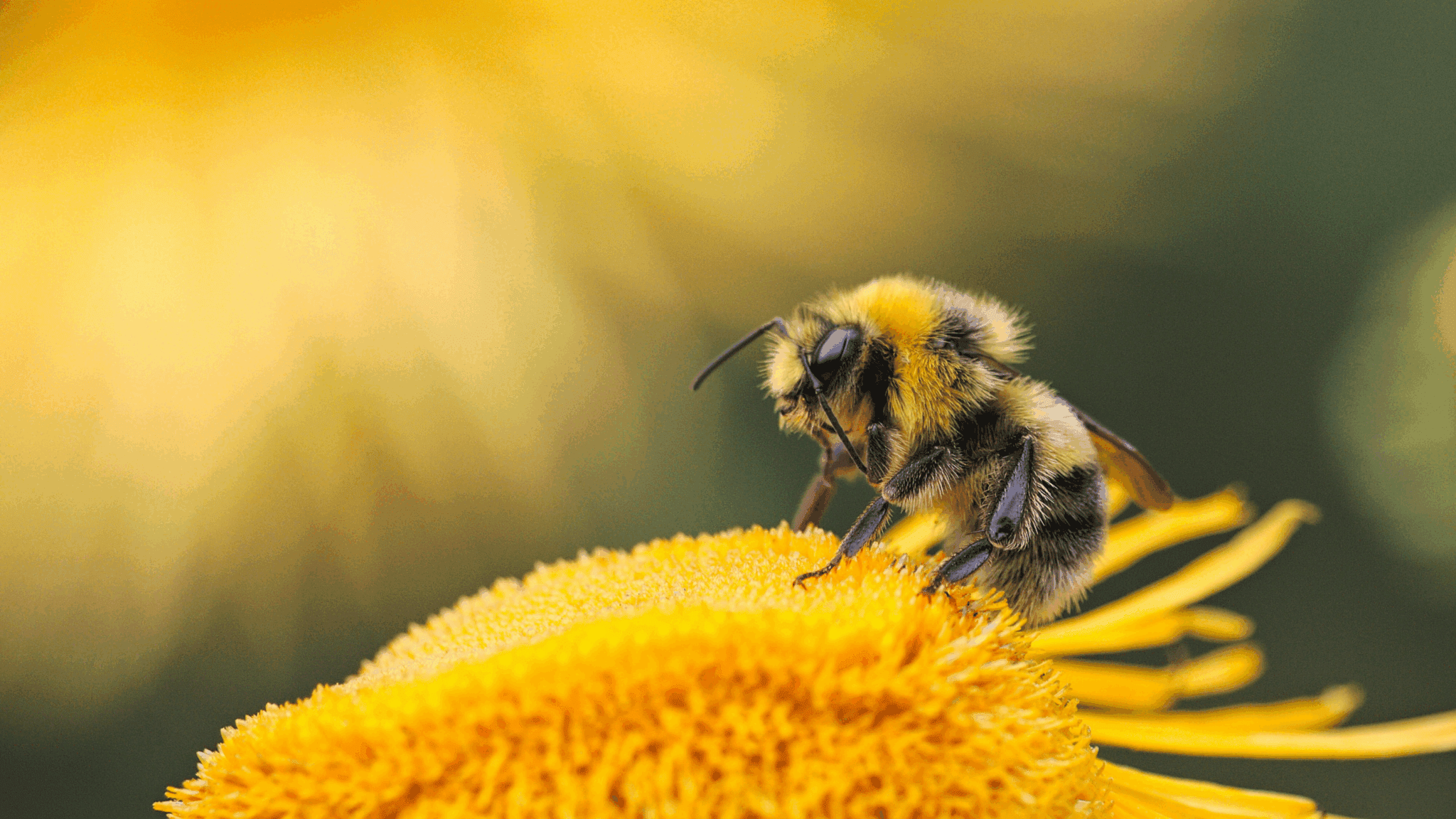
We like to think of ourselves as individuals, which takes some nerve, given how many microbes, habits, memories, appetites, borrowed ideas, and dead ancestors are involved.
“I’ve Gotta Be Me” is a favorite American lyric—“whether I’m right, whether I’m wrong”—though reality keeps complicating the pronoun.
In the Star Trek universe, the Borg announce their horror in one sentence: “You will be assimilated. Resistance is futile.” Their victims lose freedom, subjectivity, and will. Like the demonic “Legion” in the Gospel of Mark [*], the Borg represent the self overwhelmed by “the Many.”
The individual disappears.
Not every collective destroys the self. We, along with many other animals, experience ourselves as individuals. Science reveals that we are, at the same time, collective entities, more like bee colonies than we usually imagine.
John Penberthy’s To Bee or Not to Bee has found a loyal readership as a modest spiritual fable. Now available in 11 languages, it follows a worker bee who senses that life must mean more than production, routine, and collective busyness. The book turns a comic premise into a parable about self-knowledge, generosity, and inner freedom. We are made for more than efficiency, appetite, or assigned roles.
Bernard Mandeville, the eighteenth-century Anglo-Dutch writer best known for The Fable of the Bees, used the beehive as a satirical metaphor for social life, arguing that private self-interest could produce public benefit. It begins with “The Grumbling Hive,” where a bee colony thrives on the “vices” of its members, then falters when they become honest and virtuous. The book influenced later economic and social thought, anticipating themes later associated with markets, specialization—and unintended public consequences.
Penberthy’s little bee fable moves in almost the opposite direction. It asks whether usefulness, productivity, and social cooperation are enough.
Mandeville’s hive exposes society’s hidden bargains; Penberthy’s bee wonders whether life contains more than the bargain.
That question becomes more interesting once science enters the hive. Recent work on microbiomes, “holobionts,” and collective behavior has made individuality harder to define than common sense assumes. Philosopher of science Derek Skillings, leading a Templeton-funded project on collective behavior, explains that microorganisms have shaped every large organism and that microbes play essential roles in the lives of plants and animals.
A bee belongs to a hive, but so do we: the hive of the body, the brain, the microbiome, and the social world. Individuality and belonging deepen one another.
Panpsychism presses the question further. Bees, bodies, brains, and microbiomes unsettle our idea of individuality; panpsychism unsettles our idea of consciousness itself. It holds that consciousness, or at least some rudimentary form of experience, is not confined to human beings or even to animals, but belongs in some way to the fabric of reality.
The thought is ancient. Thales, the early Greek philosopher, held that “soul” was mingled throughout the universe. He famously said, “All things are full of gods.” St. Paul, from another angle, imagined creation groaning, hoping, and waiting to be set free.
Animism, in its many forms, likewise treated the world as alive with presence, agency, and address. Stones, rivers, trees, and stars were not dead things onto which human beings projected meaning. They belonged to a world where meaning was not something humans had to add.
The scientific revolution did not simply disprove that older vision; it also disciplined Western thought away from it. By separating subject from object and treating nature increasingly as mechanism, modern science narrowed the range of what could be taken seriously as “alive,” “aware,” or inward.
Yet the question never disappeared. William James gave panpsychism a serious philosophical hearing, and some twentieth-century physicists, unsettled by the role of observation in quantum theory, reopened questions about mind, matter, and what counts as a merely “objective” world.
Today’s revival of panpsychism asks whether mind may not be a late accident in an otherwise dead universe, but something primitive, pervasive, and deepened by life.
David Bentley Hart’s argument belongs near this one, though it is not the same argument. His target is the modern mechanistic assumption that consciousness can be explained as the product of matter understood as wholly exterior, inert, and without inwardness.
If consciousness exists at all, he suggests, it may be less strange to think that mind belongs somehow to the depth of reality than to imagine awareness emerging from a picture of matter that has first excluded awareness from view. While a panpsychist may say, “Matter has mind,” Hart’s stronger claim is that matter itself exists within Mind.
The popular imagination, along with some hurried readings of science and philosophy, has long treated religion and God as “supernatural,” and the spiritual as separate from the material, as though reality were divided into two realms that occasionally overlap.
But that is not the only, or even the deepest, way to understand the matter. In much older religious and philosophical thought, spirit is not elsewhere. It is not a ghostly supplement added to the world from outside.
It is the depth of the world itself.
However debatable the revival of panpsychic thinking may be, it can feel less like a novelty than a return. T.S. Eliot’s line comes to mind: “the end of all our exploring / Will be to arrive where we started / And know the place for the first time.”
Ancient animism and modern physics are not the same thing, and they should not be forced into easy agreement. Still, both unsettle the same modern confidence: that reality is “out there,” mute, external, and dead until mind arrives to inspect it.
The world may be stranger than that.
Matter may be the name we give to mystery once we think we have explained it.
“If these should hold their peace, the stones would immediately cry out.”
—Luke 19:40
Notes and reading
[*] The demonic “Legion”—In the Gospel of Mark (Chapter 5), "Legion" is the collective name given to a multitude of demons possessing a man in the region of the Gerasenes. When Jesus asks the unclean spirit its name, it replies, "My name is Legion, for we are many," symbolizing an overwhelming, destructive force.
Joshua M. Moritz and Robert John Russell, eds. God’s Providence and Randomness in Nature: Scientific and Theological Perspectives (2019). I have learned a great deal from both writers. Moritz has taught philosophy at the University of San Francisco, theology at the Jesuit School of Theology of Santa Clara University, and theology and science at the Graduate Theological Union in Berkeley. Russell, a physicist-theologian and founding director of the Center for Theology and the Natural Sciences, is also an ordained minister in the United Church of Christ. That much we have in common.
For readers who want more background: John Penberthy’s To Bee or Not to Bee (2007) supplies the modest bee fable; Bernard Mandeville’s The Fable of the Bees (1714) gives the older social satire; William James’s The Principles of Psychology (1890) gives panpsychism one of its classic modern hearings; Philip Goff’s Galileo’s Error (2019) offers a lucid contemporary defense; and David Bentley Hart’s You Are Gods: On Nature and Supernature (2022) challenges the habit of treating nature as a self-sufficient order set over against the divine.
Raymond Tallis, “Against Panpsychism,” Philosophy Now (August/September 2017).
Tallis, a physician and philosopher who is himself a critic of reductionist accounts of mind, objects that panpsychism does not really explain consciousness; it spreads the mystery around. If every bit of matter has some simple form of experience, we still have to explain how those simple forms become one conscious self.
> The argument can be turned around. If panpsychism struggles to explain how simple forms of experience combine into a single conscious self, then materialism faces its own difficulty: after stripping matter of inwardness, it must explain how consciousness appears at all. This is where Hart’s argument, discussed above, becomes relevant.
Victoria Nelson, The Secret Life of Puppets (2001). Modern Western culture officially stopped believing objects could carry spiritual power, then spent the next few centuries letting that belief reappear through puppets, dolls, automatons, cyborgs, horror, fantasy, and science fiction. We simply gave the old impulse new hiding places. AI is not Nelson’s subject, but it may be the latest and most convincing one: Big Brother, admitted at last to the family.
“Flickering Enlightenment”—Eliane Glaser, Aeon (May 28, 2026). Glaser argues that the Enlightenment, attacked from Left and Right, can be defended only by using its best inheritance: permanent critique. She has written widely on contemporary propaganda, fake authenticity, Astroturf politics, and cyber-utopianism. Among other books, she authored In Defence Of Elitism / Elitism: A Progressive Defence (2020).