
Falling Heroes
Looking for trouble.

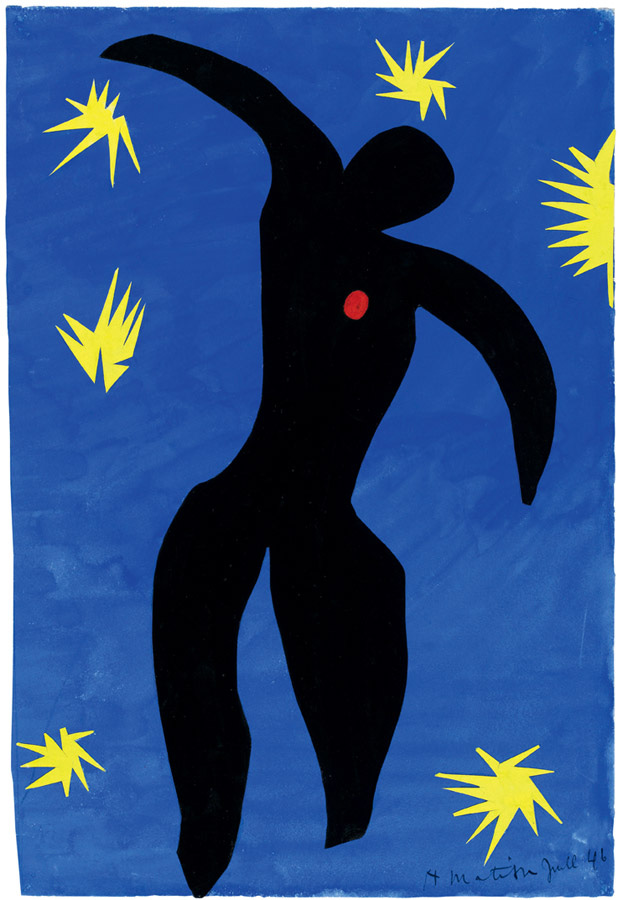
We seem fixated on bringing down heroes. It began with figures like Washington and Jefferson and now includes people like Martin Luther King and Cesar Chavez. Whenever we see a statue, someone points out the person’s biggest blunders.
This focus on flaws makes our history feel like a fight between legends and indictments. The people who shaped this country were complicated and imperfect. If we keep replacing simple myths with harsh criticism, we will miss the real story of how we arrived here and how to live together.
Taking down statues or changing holiday names barely hides the reality that our foundations rest on people with serious moral flaws. A different street name does not change the neighborhood’s history. George Washington was a slaveholder. Thomas Jefferson fathered children with Sally Hemings, a woman he enslaved.
Other leaders we praise were little better. Woodrow Wilson did not just overlook the prejudices of his era; he openly supported segregation. Franklin D. Roosevelt ordered the internment of more than 100,000 Japanese Americans during World War II. John F. Kennedy’s affairs created national security risks during the Cold War.
René Girard’s concept of the scapegoat shows that heroes can be both part of the group and outsiders. Old myths recognized this. Romulus founded Rome but killed his brother. Cain, the first murderer, also built the first city. These stories remind us that one person can be both a hero and a criminal.
Initiatives such as the 1619 Project often replace national aspirations with a focus on historical injustices. This approach elevates the suffering of victims over the accomplishments of founders, recasting achievement as guilt and excellence as privilege.
History used to be written by the winners; now it is edited by the survivors. But there is a simpler issue. If any of us, let alone our country, is reduced to our worst behavior, who can stand?
Today’s historians are caught in the crossfire of this conflict. Our culture wars are grim reckonings with the national soul. Traits that once signaled greatness are now traded for a new currency: the history of our iniquities.
Some people look back to the frontier days and value individual strength. Others focus on America’s long record of injustice. Trump and his MAGA supporters often draw on frontier distrust of the federal government and use Confederate symbols to argue for a narrower idea of what it means to be American. Many in Blue America, influenced by 1960s protest movements, see the country as diverse and rely on the federal government to protect rights and opportunities for all.
When we forget what we’ve achieved together, these stories can make unity feel like betrayal. We start seeing each other less as neighbors and more as suspects.
The answer isn’t to trade one simple story for another but to tell the truth: founders who both built and betrayed, neighbors whose depths we’ve ignored, and a country that has both succeeded and failed.
National myths show that change is possible. What we do and the words we use to describe it eventually shape who we become. Arguments might win debates, but stories shift the ground.
Ruth Bader Ginsburg said, “Fight for the things that you care about. But do it in a way that will lead others to join you.” Without respect and a story we can see ourselves in, trust remains out of reach.
Notes and reading
Narrative Politics: Stories and Collective Action—Frederick W. Mayer (2014). Mayer synthesizes the sciences and humanities to explain how stories function as the primary engine of political collective action.
A Great Disorder: National Myth and the Battle for America—Richard Slotkin (2025). A reconsideration of America’s foundational myths and their role in political divisions.
The Revolt of the Public and the Crisis of Authority in the New Millennium—Martin Gurri (2018). Digital technology shifts the information balance between elites and the public, allowing networked movements to challenge established institutions.
> TikTok now demonstrates the exponential power of memetic rivalry (memes) and compressed storytelling across conflicts involving the U.S., Israel, Russia, Iran, and Ukraine—aptly captured in the slogan, “Trends start here.”
“The Story of Prayer & Fire” in The Gates of the Forest—Elie Wiesel (1995)—Efforts to remember, even just telling the story, remain sufficient to accomplish a miracle.
In Memory of Memory—Maria Stepanova (2021). Russia’s greatest living poet brings together diverse ideas and figures to rethink how cultural and personal memory work—shortlisted for the 2021 International Booker Prize.
Ruth Bader Ginsburg, “Fight for the things that you care about. . .” — Harvard Radcliffe Institute (2015). Ginsberg was responding to a question about the advice she would give young women today.
Women are not mentioned in this reflection among “falling heroes” along with men because fewer have been defenestrated—perhaps another sign of ongoing repression.
You make a compelling case that the false dichotomy between simplistic national myths and one-sided criticism doesn’t serve us well. You put the problem better than I do here:
“This focus on flaws makes our history feel like a fight between legends and indictments. The people who shaped this country were complicated and imperfect. If we keep replacing simple myths with harsh criticism, we will miss the real story of how we arrived here and how to live together.”
So we fight over textbooks, putting civics teachers and even language arts teachers in the crossfire between competing ideologies. More nuanced accounts—and far truer accounts—appear often in fuller accounts—in biographies, for instance.
I do tire of feeling that I should justify my citations of the likes of Jefferson, Wilson, and King to counteract the assumption that I’m somehow covering for their frailties by simply citing them.
Like Lincoln in his Second Inaugural (It may seem strange . . . but let us judge not . . .), I’ll remove my mantle of objectivity long enough to say that much of the pushback to the history I learned in elementary and high school is necessary if one-sided. Outside of a national covenant, winners don’t concede authorship for long. Here’s how you express a beautiful balance possible in such a covenant in terms of three interacting covenantal entities—founders, neighbors, and polity: “founders who both built and betrayed, neighbors whose depths we’ve ignored, and a country that has both succeeded and failed.”
I wish our society were more like ancient Israel’s. Its authoritative texts were fuller and more nuanced than our thin canon. One thinks of the books of Samuel and Kings, for instance, as honest appraisals of the kings’ (and in some cases, even the prophets’ and priests’) accomplishments and shortcomings. In a culture grounded in such rich, honest, and detailed narratives, later summaries (e.g., Moses’ song, Luke’s accounts of Israel’s journey put into the mouths of Stephen and Peter)—unlike our ideologies—never threaten to have the last word. National myths, if one may call them that, are richer and more instructive—and potentially more inspirational and more convicting—for having grown in such soil.
Thank you for this fine call for curiosity, nuance and balance.
Perhaps it would be a useful to check out this reference:
http://www.historyisaweapon.com