
A Good Friday World
“My God, my God, why have you forsaken me?” — Psalm 22:1

While William Sloane Coffin Jr. was Senior Minister at Riverside Church in New York City, his 24-year-old son Alex died in a car accident. After playing tennis on a rainy night, Alex lost control on a wet road and crashed into a channel in South Boston.
Ten days after the funeral, Coffin delivered a sermon reflecting on his friendly rivalry with his son, who always wanted to win and had now, in his words, beaten him to the grave. He expressed gratitude to the church for its support, while noting one well-intentioned exception.
The night after the accident, a woman came to his sister’s house with an armful of quiches. She hurried into the kitchen, shook her head, and sighed, “I just don’t understand the will of God.”
“Instantly,” Coffin said, “I was up and in hot pursuit, swarming her. ‘I’ll say you don’t, lady!’ I knew the anger would do me some good.”
Later, Coffin said nothing upset him more than when intelligent people failed to see that God does not plan such tragedies. He made this clear from the pulpit:
“Do you think it was God’s will that Alex never fixed that lousy windshield wiper? That he was probably driving too fast in the storm or had a couple of ‘frosties’ too many earlier that evening? Do you think it was God’s will that no streetlights or barriers separated the road from Boston Harbor on that turn?”
After clearing the air, Coffin put it plainly: love depends on its impossibility. To a casual observer, love may appear transactional—a response to beauty, a reward for kindness, or a contract of mutual support.
But love that exists only when it seems possible or earned is merely an exchange. Real love begins where it shouldn’t, reaching across the gap of a cold harbor, a broken windshield, or a silent heaven. The cross does not show where God withdrew but how far love goes.
At the funeral in Boston, Alex’s younger brother stood by the casket and offered the only eulogy he felt was honest: “You blew it, buddy. You blew it.” This was his way of rejecting false comfort.
Coffin said we should never say, “It is the will of God,” when someone dies. We do not know enough to say that. He found comfort in believing Alex’s death was not God’s will.
When the waves closed over the sinking car, God’s heart was the first to break. Coffin did not soften the pain. He knew the right passages—“Blessed are those who mourn”—but said grief can make even true words feel unreal. The main feeling is loss: “My God, my God, why have you forsaken me?”
Christianity does not explain suffering; it refuses to justify it. Good Friday is not a problem to solve but a truth to face.
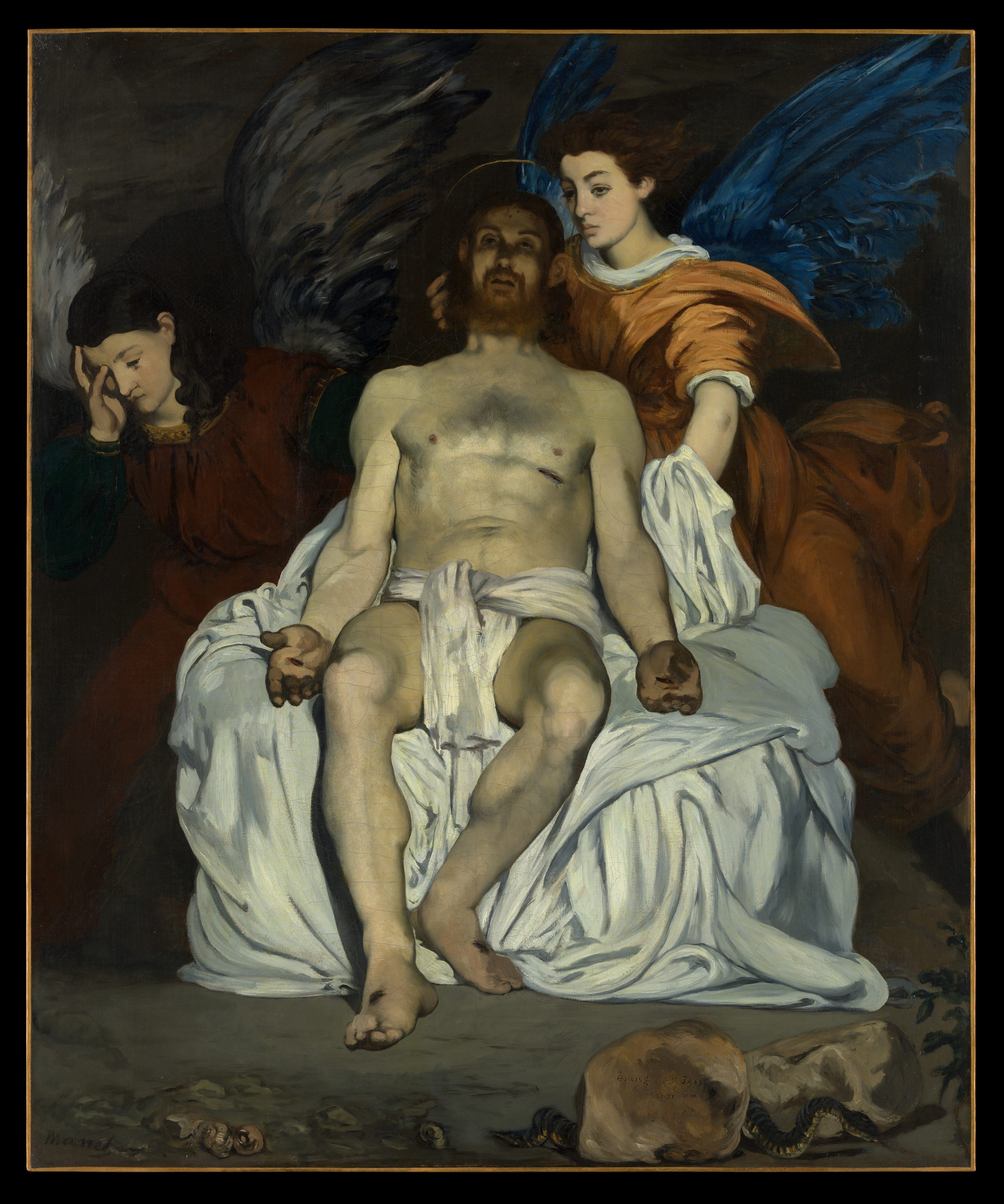
Death is real. The cross is not a temporary illusion Easter dispels. It reveals what endures: love does not save by force. It remains present even when it appears defeated. Silence is not absence. The cross is not an answer but a protest.
“How do we carry our losses?” Coffin asked. We can become bitter or choose to help others carry theirs. We often look for resurrection on our own terms and then complain that it does not make sense. Coffin ended his sermon with these words:
“We live in a Good Friday world. Jesus cried out, ‘My God, my God, why have you forsaken me?’ Yes—but at least, ‘My God, my God.’ The psalm begins that way; it does not end that way. God is not absent from suffering but already present, whatever we face.”
Coffin added that when Alex beat him to the grave, the finish line was not Boston Harbor. If a lamp went out, it was because the Dawn had come. He sought consolation in the love that never dies and the grace that always is.
We find peace when, in the wreckage of our own Boston Harbors, we discover the love that refuses to leave us there.
Notes and reading
Good Friday - this Friday, April 3
“My God, my God, why have you forsaken me?”—the cry of dereliction spoken by Jesus during his crucifixion, quoting Psalm 22:1, recorded in Matthew 27:46 and Mark 15:34.
The “Good” in Good Friday comes from a Middle English word for “holy,” marking the day as sacred rather than celebratory. Liturgically, many traditions observe it through fasting and mourning, centering on the crucifixion as a transactional sacrifice for sin—a view that stands in sharp contrast to the non-punitive “embrace” of the early church.
Even the Western history of destruction, against all odds, mobilizes resistance. For Friedrich Nietzsche—no friend of Christians—Good Friday is not about sacrifice and suffering but about love: it refuses the logic of violence and domination. In this reading, love becomes the most enduring form of resistance.
In The Anti-Christ, Nietzsche argues that Jesus did not “come to ‘redeem mankind’ but to demonstrate how one ought to live. “What he bequeathed to mankind is his practice . . . not a belief, but a doing.” (§35)
He famously insists in that same work (§39) that “the only true Christian died on the cross.” In Nietzsche’s view, the church took a life defined by radical, non-judgmental love and turned it into a religion of guilt, punishment, and resentment in the name of “atonement.”
Remarkably, this almost converges with Origen’s vision of the crucifixion. In his Homilies on Joshua, the third-century church father writes that Christ on the cross stretched out his arms to “hold the whole world” in a unity of love.
The cross here is a supreme gesture of divine outreach, not a transaction of punishment. Against imperial violence that erected it, the cross becomes, in Origen’s reading, an act of cosmic resistance.
> See David Bentley Hart, “Christ’s Rabble,” Commonweal (October 7, 2016); The Beauty of the Infinite (2003), Part I, §1; and The Doors of the Sea (2005), where Hart argues that the cross is not an explanation of suffering but a refusal to justify it. Cf. Origen, Homilies on Joshua, Homily 8 (c. 250 AD), trans. Barbara J. Bruce (2020).
William Sloane Coffin Jr.—legendary Yale chaplain and peace activist whose moral imagination defined a generation of American liberal Protestantism. I am indebted to him as my first mentor and the man under whom I began my own ministry.
> “Alex’s Death” (January 23, 1983) in The Collected Sermons of William Sloane Coffin, Volume 2 (2008).The Crucifixion: Understanding the Death of Jesus Christ—Fleming Rutledge (2015). Rutledge, an Episcopal priest and scholar, traces the history of crucifixion metaphors. She argues that no single theory can exhaust the meaning of the cross.
Crucifixion: In the Ancient World and the Folly of the Message of the Cross—Martin Hengel (1977). Hengel, a German historian, explores how “the folly of the cross” was seen by contemporaries, showing why the idea of a crucified God was an impossibility for the ancient mind.
Crucifixion and modern literature—The Passion story has increasingly been retold as a frame for contemporary experience, particularly with the novel. See theologian and critic F.W. Dillistone, The Novelist and the Passion Story (1960).
So many great lines here framed by your thoughtful account of Alex Coffin's tragedy. Here are my favorites:
"The cross does not show where God withdrew but how far love goes."
"Good Friday is not a problem to solve but a truth to face."
"The cross is not an answer but a protest."
Alex's younger brother's eulogy may be the best I've ever heard.