Discussion about this post

User's avatar
Bryce Tolpen's avatar

Your essay causes me to ruminate on a favorite subject—the centrality of appearance—but now with thinkers I’ve never heard of— Slavoj Žižek and Owen Barfield.

“Be only your face,” Italian philosopher Giorgio Agamben advises. “Go to the threshold. Do not remain the subjects of your properties or faculties, do not stay beneath them: rather go with them, in them, beyond them.”

Agamben might as well have been drawing conclusions from remarkable novel The Happy Hypocrite that you gloss here, in which the protagonist goes "to the threshold." Our professed disdain for hypocrisy may be based in large part on a misapprehension of Jesus’ criticism. The public masks of the scribes and Pharisees in question weren’t at odds with their inner essences—or at least that doesn’t seem to be Jesus’ point. His point, I think, is that their public actions were inconsistent and deceitful. Eating up the property of widows, for instance, is a public action—a systemic one, not a private one.

Arendt believed that the French Revolution collapsed because its leaders, unlike the American founders, mistrusted public appearance and, not coincidentally, found hypocrisy everywhere:

“However deeply heartfelt a motive may be, once it is brought out and exposed for public inspection it becomes an object of suspicion rather than insight; when the light of the public falls upon it, it appears and even shines, but, unlike deeds and words which are meant to appear, whose very existence hinges on appearance, the motives behind such deeds and words are destroyed in their essence through appearance; when they appear they become ‘mere appearances’ behind which again other, ulterior motives may lurk, such as hypocrisy and deceit. The same sad logic of the human heart, which has almost automatically caused modern ‘motivational research’ to develop into an eerie sort of filing cabinet for human vices, into a veritable science of misanthropy, made Robespierre and his followers, once they had equated virtue with the qualities of the heart, see intrigue and calumny, treachery and hypocrisy everywhere.”

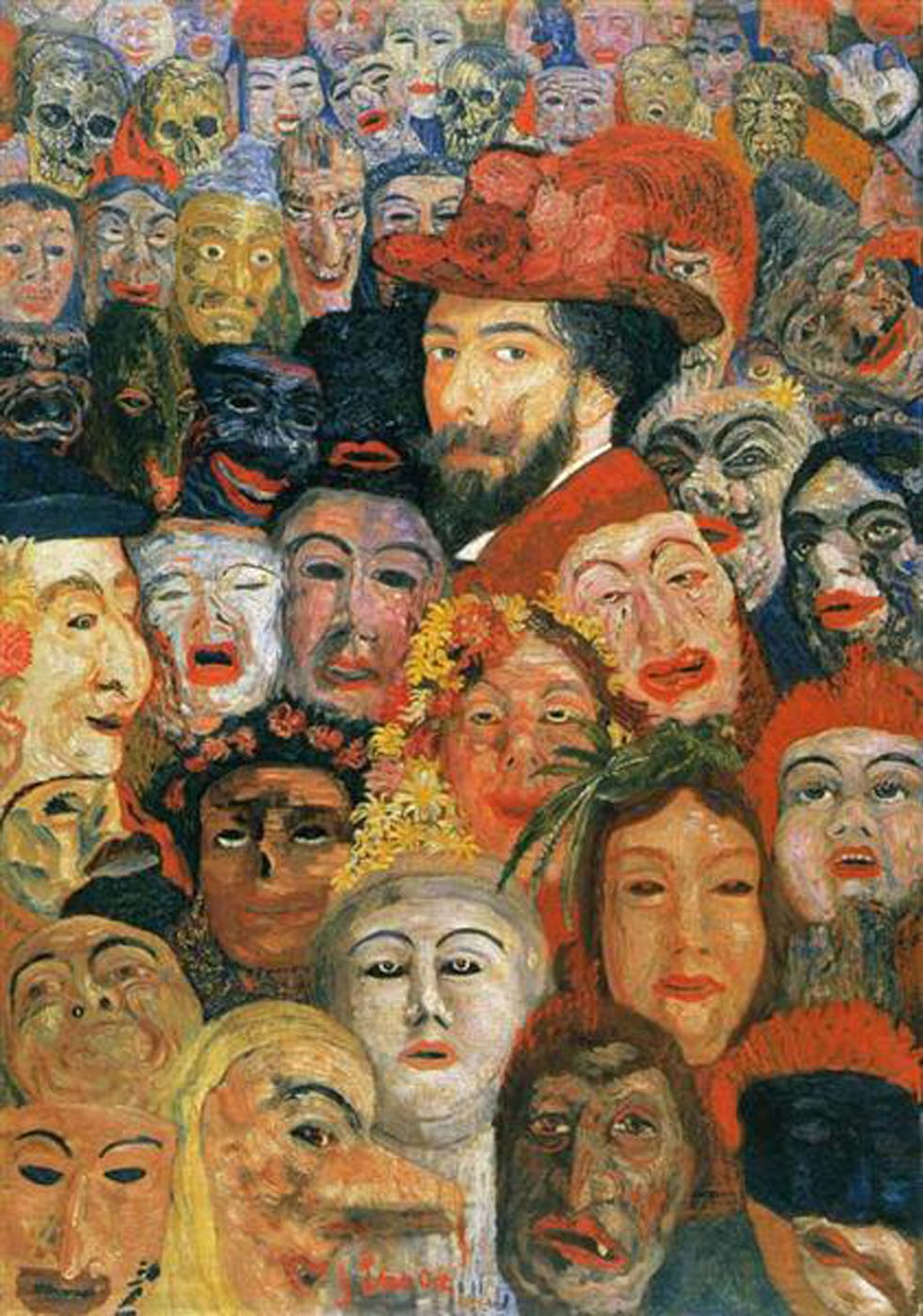
Redeeming masks, as this novel may be said to do, may be the first step toward a greater practice of redemption. Fielding in one of his Tom Jones essays enjoins us to be merciful by comparing us to players:

“A single bad Act no more constitutes a Villain in Life, than a single bad Part on the Stage. The Passions, like the managers of a Playhouse, often force Men upon Parts, without consulting their Judgement, and sometimes without any regard to their Talents. Thus the Man, as well as the Player, may condemn what he himself acts . . .”

Fielding writes such trenchant comedy, I think, because he discovers redemption so easily. Comedy is so deeply on the surface, much as it is in the Gospels.

What a great observation about Charlotte! Charlotte spinning her web is akin to God at creation: as you say, “They [the words] do not hide reality; they call it into being.” Creation is redemption. The great temple theologians, both Jewish and Christian, were right: God creates not in a void but in the midst of chaos. We can’t fix our own chaos. We can speak the truth; we can, as you credit Barfield with pointing out, participate.

If a book is a machine to think with, as I.A. Richards claims, then this post does the job of something burdened with a lot more words. Thank you.

4 more comments...

No posts

Ready for more?