
Easter is coming
So what?

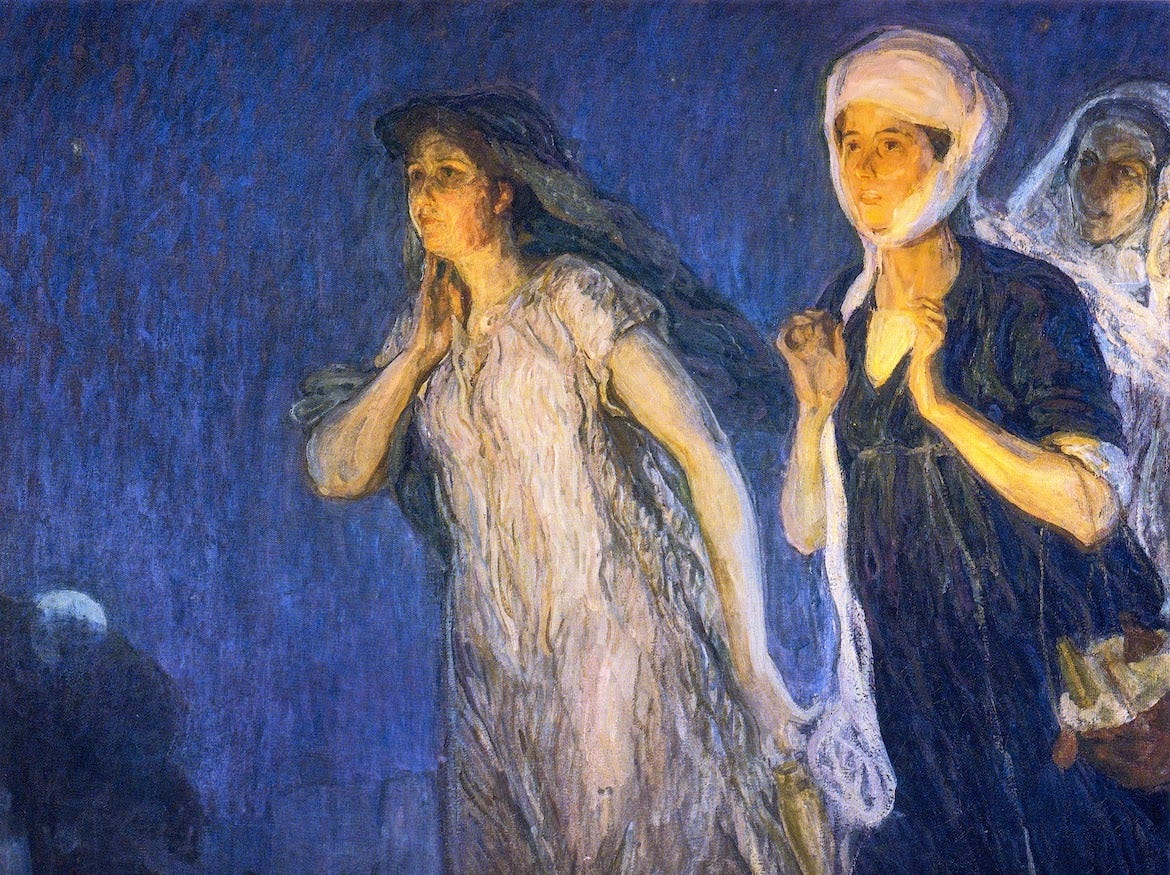
Bear with me, friends who aren’t theologians. What follows may sound unusual just now.
We are in Lent, moving toward Easter. Yet Easter itself is also preparation. The life it promises is not only for Jesus, not only for Christians, and not only for a distant future. It has already begun, though not complete.
Easter proclaims Jesus risen from the dead. Not a corpse revived. Not an idea preserved. It declares that death does not have the final word over anyone or anything. Reality itself moves, however slowly, toward healing, not ruin.
Christ rises not to bail us out, but to renew life from within. Resurrection is not escape but transformation—from diminished living to fuller life. Easter is both promise and summons. You can almost hear the disciples: “Oh no. Back to work.”
Frederick Buechner once said religious people often try to be “more spiritual than God.” Christianity insists that “the Word became flesh,” not slogan or abstraction, but bone and breath. Yet we prefer to turn it back into words.
God is revealed in human nature—not as a supplement, but as its ground. Grace is not an intrusion into a self-sufficient world; it is the life of what is. Creation shares in that life. We glimpse it when we stop resisting our source.
We bear God’s image, however obscured. In Jesus, that image is revealed in its fullness—most clearly at Easter—and with it the promise of our own renewal. All of this collapses if reduced to flowers and trumpets.
Julian wrote “all shall be well,” not “all is well.” She lived through plague and war. Her words followed grave illness. This is not denial. It is defiance. Suffering is real, but not ultimate.
We live in a Good Friday world. Yet, as Augustine said, “Alleluia is our song.” We sing not because pain has ended but because it does not prevail.
Handel composed the “Hallelujah” chorus while ill, indebted, and largely dismissed. Messiah was not triumphalism; it was endurance set to music. The chorus does not deny sorrow; it answers it.
You can find the same defiance, only quieter, in works of literature that show resurrection without big display: some explicitly Christian, others more oblique, symbolic, or existential. These are not works of lilies and brass choirs. Renewal comes quietly, sometimes reluctantly, almost invisibly.
Sometimes truth arrives with the force of a hint.
Czesław Miłosz’s “A Song on the End of the World” shows the end times without spectacle. A bee circles a clover. A fisherman mends his net. An older man ties up tomatoes and says there will be no other end of the world. Disaster is real, but it does not have the last word. Here, resurrection means keeping on, ordinary life moving forward.
Hannah Arendt offers a civic echo of Easter. In The Human Condition, she talks about “natality,” the ability to start over. Every birth breaks the sense that things are set in stone. Every action can set something new in motion. Renewal does not come from outside history; it grows within. Politics depends on this power to begin again.
In The Plague, Albert Camus removes illusions about renewal. The disease fades, but the germ never disappears. There is no celebration. Dr. Rieux keeps fighting because it is simply the decent thing to do. Hope is not something you announce or wish were true; it is something you live. Here, resurrection means remaining faithful when the worst returns.
Walker Percy’s The Moviegoer gets at something similar: no miracles, no grand reversals—just a man waking to the possibility that ordinary life might mean something. Renewal comes quietly. What is closest is easiest to miss. Percy wrote that God hides things by putting them right next to us.
If Easter means anything, it means this: no life is disposable, logic alone is not enough, no failure is final, and no grave is the end. It is not just private comfort for believers. It is a call to everyone to live now as if we are moving toward reconciliation, not ruin.
That isn’t being naïve. It’s a form of resistance.
And why, even now, we can say Alleluia.
T. S. Eliot, who also loved Julian’s words, knew that any “all shall be well” passes through fire.
And all shall be well and
All manner of thing shall be well
When the tongues of flames are in-folded
Into the crowned knot of fire
And the fire and the rose are one.
—Little Gidding, Four Quartets
Notes and reading
“...all manner of thing shall be well.”—Julian of Norwich (1342–1416), a Christian mystic who recorded her visions in Revelations of Divine Love, the first book in English known to have been written by a woman. C.S. Lewis observed: “The real difficulty is to adapt one’s steady beliefs about tribulation to this particular tribulation; for the particular, when it arrives, always seems so peculiarly intolerable.”—The Problem of Pain, chap. 1.
Amy Frykholm, Julian of Norwich: A Contemplative Biography (2010), offers a clear and accessible account of Julian’s life and theology.
Rowan Williams, Resurrection: Interpreting the Easter Gospel (new edition 2014), explores the theological and existential meaning of Easter beyond sentiment or spectacle.
David Bentley Hart, The Light of Tabor (2025), esp. chap. 5, reconsiders the metaphysical logic of incarnation and deification in contemporary terms. Hart’s epigraph is Emerson’s line: “Every man is a divinity in disguise, a god playing the fool.”
It's fun to read through summaries of these works with their subtle Easter messages. A reminder from those I've encountered, a recommendation for those I haven't. I'd add only one work to this great cloud of witnesses: Dilsey taking her charge Benjy to her African-American church on Easter Sunday. This conclusion to The Sound and the Fury points to quiet redemption wrapped up in suffering and endurance. I recently heard a tape recording of Thomas Merton, a great Faulkner lover, teaching on Dilsey's "section." Quite moving.