
Just Beauty
Patronizing poverty

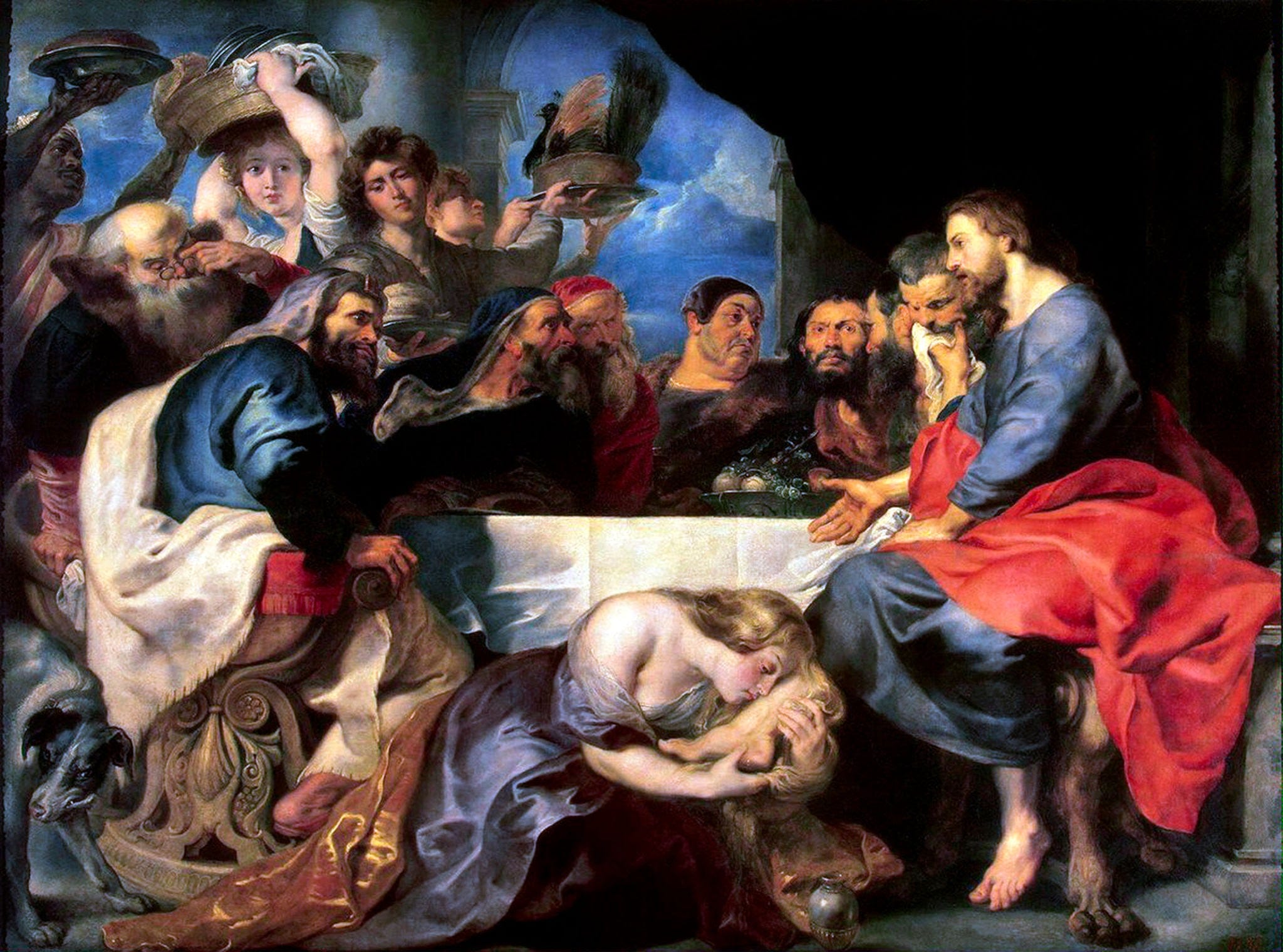
Several readers of my last post, just yesterday on the Sagrada Família and Antoni Gaudí, raised the old, necessary bugaboo of “priorities.” Next to war, massive poverty, the tragic buffoonery of our president, and escalating bloodshed in conflicts we help fund, surely this is no time to be carrying on about “beauty” and, of all things, cathedrals.
Religion is at the heart of much of the world’s terror, and has been for centuries. When all is said and done, including ongoing maintenance, the basilica in Barcelona will have cost close to a billion dollars.
The more commonsensical among us, knowing the false equivalence but unable to dismiss the question, still wonder: What does beauty have to do with justice? What is “just” about beauty? And if religion is supposed to be about morality, what about the poor? Especially when most of us are rich by comparison with much of the world.
Jesus is often put in trouble for having said, “The poor will always be with you,” as though poverty were not the issue, especially next to the lavish beauty of the perfume poured out in his honor.
Except that Jesus did not say that as an excuse for indifference. And the first to raise the “priorities” objection was Judas, who, in John’s Gospel, asks why the perfume was not sold and the money given to the poor.
What Jesus clearly meant was not that poverty is permanent and therefore tolerable, but that love of the poor is a standing obligation, while this moment of costly tenderness toward him would not come again. Judas had the arithmetic right and the heart wrong. He saw waste where Mary saw devotion. He invoked justice to rebuke beauty, and Jesus refused the terms.
The poor are not helped by a world in which beauty is forbidden; they are harmed by a world in which beauty belongs only to the rich.
There is a deep irony here. Antoni Gaudí, the artist responsible for the Sagrada Família, lived the question in his own flesh. Successful and well paid in his younger years, he gradually gave himself over to Catholic devotion and to the basilica until little remained for himself. He left fashionable rooms for a spartan workshop, gave away much of what he earned, fasted severely, dressed poorly, and increasingly appeared less like a celebrated architect than a beggar. Beauty, for him, was not an escape from poverty. It required a poverty of its own.
That poverty followed him to the end. On June 7, 1926, while walking to confession, Gaudí was struck by a streetcar. Because he was poorly dressed, unshaven, and carried no identification, he was mistaken for a homeless man and taken to the Hospital de la Santa Creu, a hospital for the poor. By the time his identity was known, it was too late. He died three days later and was buried in the crypt of the basilica to which he had given his life.
This week, exactly one hundred years after Gaudí’s death, Pope Leo XIV will be in Barcelona to offer blessings at two Catholic churches that couldn’t be more different. First, he’ll meet with Catholic charity and welfare organizations at Sant Agustí, a humble church sometimes called “the Cathedral of the Poor,” in a densely packed, largely immigrant neighborhood. Then he’ll celebrate Mass at the spectacular Sagrada Família.
The contrast is almost too neat: poverty in the late afternoon, beauty in the evening. But perhaps that is the point. The church is most false when it chooses one at the expense of the other.
Imagine, then, a cynical bystander challenging him: “You proclaim respect for the poor. Given the Vatican’s wealth, what are you doing about poverty?”
No more than Gaudí would Pope Leo be offended by the question. He might simply answer, “Not enough. Never enough. But we honor the poor by refusing to make beauty a privilege of the comfortable. Feed people. House them. Give them justice. But do not pretend that ugliness is more moral. The poor need bread, shelter, dignity, and the beauty otherwise denied them.”
Religion has done terrible harm. But no tradition is understood by its worst expressions alone. To judge Christianity only by its worst disciples is to distort the truth.
The poor are patronized by the wealthy, unable to see their complicity in what they claim to deplore. It is easier to give untold sums to alleviate poverty than to ask what made such deprivation profitable.
Jesus was not sentimental about this. “Where your treasure is, there your heart will be also.” Not where your opinions or sympathies are. Not even where your politics are. Where your treasure is.
Gaudí answered that challenge with his life. He did not romanticize poverty. He simply gave his labor to a beauty no private owner could possess.
Notes and reading
Gaudi: A Biography – The Icon of Artistic Integrity Whose Controversial Catalan Masterpieces Defined Modern Architecture. Gijs Van Hensbergen (2003). Van Hensbergen is an art historian and Hispanist, also author of The Sagrada Familia: The Astonishing Story of Gaudí’s Unfinished Masterpiece (2018).
“History of the Basilica”—sagradafamilia.org.
“Not Too Little, Too Late. . .”—Gabriela Saldivia, NPR, June 9, 2026. Saldivia is a digital editor and an Edward R. Murrow award-winning journalist.