
A Difficult Glory
July 4 - Make America again.

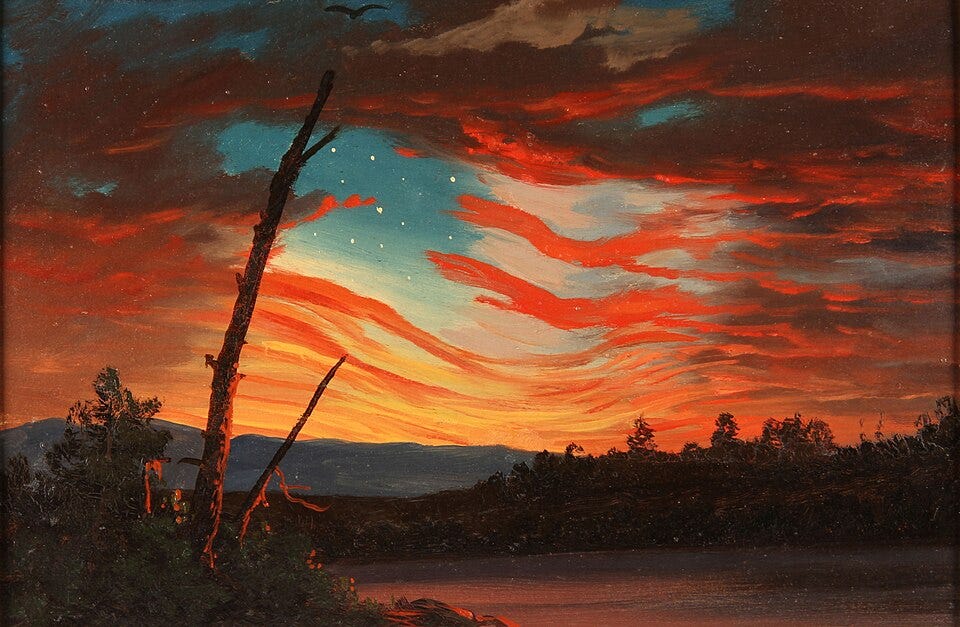
“I, too, sing America.” — Langston Hughes, 1901–1967
Poet, novelist, playwright, and chronicler of Black life in America, Hughes held America to its promise. Who has been allowed to inherit that promise, and who has been left outside it?
Let America be America again.
Let it be the dream it used to be.
Let it be the pioneer on the plain
Seeking a home where he himself is free.
(America never was America to me.)
Let America be the dream the dreamers dreamed—
That great strong land of love
Where never kings connive nor tyrants scheme
That any man be crushed by one above.
(It never was America to me.)
O, let my land be a land where Liberty
Is crowned with no false patriotic wreath,
But opportunity is real, and life is free,
Equality is in the air we breathe.
(There’s never been equality for me,
Nor freedom in this “homeland of the free.”)
Say, who are you that mumbles in the dark?
I am the poor white, fooled and pushed apart.
I am the Negro bearing slavery’s scars.
I am the red man driven from the land.
I am the immigrant clutching the hope I seek—
And finding only the same old stupid plan
Of dog eat dog, of mighty crush the weak.
For all the dreams we’ve dreamed,
And all the songs we’ve sung,
And all the hopes we’ve held,
And all the flags we’ve hung,
The millions have nothing for our pay—
Except the dream that’s almost dead today.
O, let America be America again—
The land that never has been yet—
And yet must be.
The land that’s mine—
The poor man’s, Indian’s, Negro’s, ME—
Who made America,
Whose sweat and blood, whose faith and pain,
Whose hand at the foundry, whose plow in the rain,
Must bring back our mighty dream again.
O, yes,
I say it plain:
America never was America to me,
And yet I swear this oath—
America will be!
Out of the rack and ruin,
The graft, and stealth, and lies,
We, the people, must redeem
The land, the mines, the plants, the rivers,
The mountains and the endless plain—
And make America again.
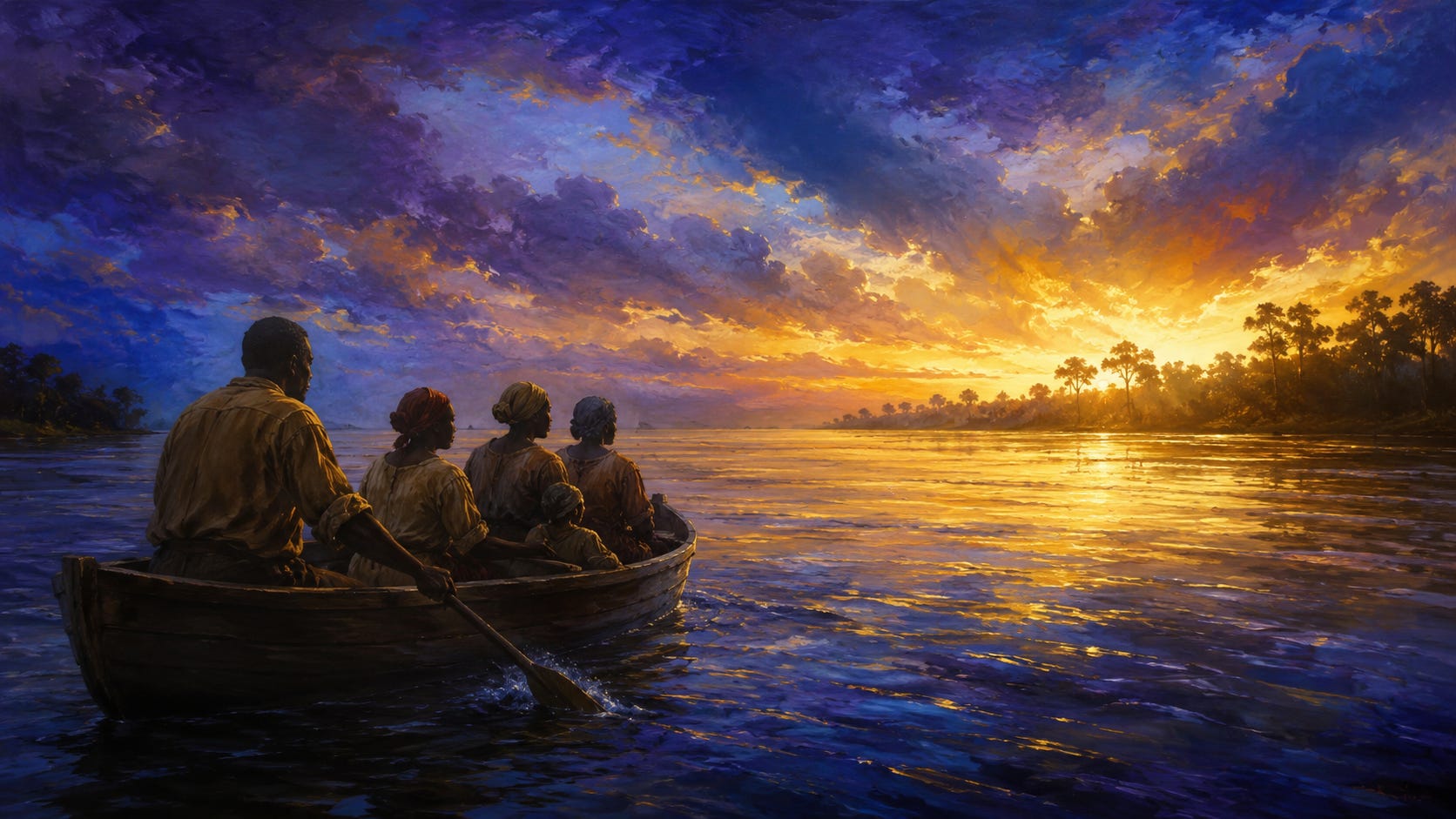
“Deep River” — Paul Robeson (1898–1976), from the original recording (2:17).
Robeson—singer, actor, athlete, lawyer, and political dissenter—sang from the gap between America’s praise of freedom and its denial of it. The spiritual expresses the longing for a promised land.
Notes
Langston Hughes, “Let America Be America Again,” Esquire, July 1936; later collected in A New Song (1938). Excerpted and abridged here.
Paul Robeson recorded “Deep River” in 1927. See Wayne D. Shirley, “The Coming of ‘Deep River,’” American Music 15, no. 4 (Winter 1997).
On the American Founding, see Joseph J. Ellis, The Great Contradiction: The Tragic Side of the American Founding, and Gordon S. Wood, The Radicalism of the American Revolution. Ellis stresses the moral contradiction at the heart of the Founding, while Wood stresses the genuinely radical release of egalitarian and democratic energies. Read together, they suggest that 1776 was a beginning that opened democratic possibilities and left grave injustices unresolved.